
Comprehensive Review of Blood-Brain Barrier-Penetrating Adeno-Associated Virus (AAV) Capsid Engineering for Central Nervous System (CNS) Gene Therapy
Mar 6, 2026
Introduction
The central nervous system (CNS), functioning as the body’s command center with high energy demands yet lacking intrinsic energy storage, relies on 25% of cardiac output for sustenance. The blood-brain barrier (BBB), composed of continuous capillary endothelium, tight junctions, basement membrane, pericytes, and astrocytes, selectively permits essential nutrients while excluding neurotoxic substances. This protective mechanism, however, severely restricts therapeutic access to CNS region due to limited drug/molecular permeability.
Adeno-associated virus (AAV) vectors have emerged as promising gene delivery platforms owing to their low immunogenicity and sustained transgene expression. Traditional AAV serotypes AAV9 and AAV-rh10 exhibit partial BBB penetration but require high doses, leading to off-target accumulation and hepatotoxicity. Recent advances in capsid engineering have yielded next-generation variants with enhanced BBB transmigration efficiency, cell-type specificity, and reduced systemic toxicity.
This review systematically examines advancements in AAV capsid engineering, focusing on enhanced blood-brain barrier (BBB) penetration, cell-type specificity, and reduced off-target effects. Parallel efforts in other labs, such as receptor-informed engineering (TfR1/ALPL targeting) and machine learning-guided design, have expanded the toolkit for CNS gene delivery. Challenges include species-specific translation barriers and manufacturing scalability, while emerging frontiers encompass personalized capsid engineering and combinatorial therapies.
Finding Highlights
- Numerous of library preparation methods (peptide insertion libraries, random mutagenesis, chimeric capsid libraries, saturation mutagenesis) were developed.
- Numerous of screening methods (CREATE System, TRACER System, in vivo & in vitro screening) were developed.
- Numerous of animal Models (rodents, non-human primates, human brain organoids) were developed.
Methods Description
Platform:
- Multiplexed-CREATE System (Gradinaru Lab): Integrates Cre-dependent selection, next-generation sequencing (NGS), and synthetic library generation to identify capsids with desired tropisms;
- TRACER (Voyager Therapeutics): Tropism Redirection of AAV by Cell-type-specific Expression of RNA screen platform;
- AI-Guided Design: Platforms like SIFTER (Sangamo Therapeutics) screen tens of millions of variants to identify capsids with superior CNS tropism;
- J-Brain Cargo® (JBC) technology (JCR Pharmaceuticals);
- Targeting CNS Receptors: Capsids engineered to interact with LY6A, LY6C1, TfR1, or ALPL enhance BBB crossing.
Key features of these platforms include:
- Multi-dimensional screening: Simultaneous positive (CNS) and negative (liver) selection across ~1.0 billion variants.
- Cross-species validation: Robust performance in murine models (C57BL/6J, BALB/cJ), non-human primates (marmosets, rhesus macaques), and human organoids.
- Functional optimization: Mutations in VP1 regions (e.g., AA 452-460 loop) balance BBB penetration with reduced liver tropism.
Key Results and Figure Interpretation
- PHP.B/PHP.eB Series
Developed by Gradinaru’s group through AAV9 engineering, PHP.B and PHP.eB exhibit superior BBB penetration in mice following intravenous (IV) administration. PHP.eB demonstrates ~20-30X higher CNS transduction efficiency compared to AAV9, with Ly6a-independent mechanisms enabling broad murine strain compatibility. However, hepatic accumulation remains a concern, prompting the use of tissue-specific promoters to restrict transgene expression. Cross-species efficacy in non-human primates (NHPs) remains variable, necessitating further optimization.
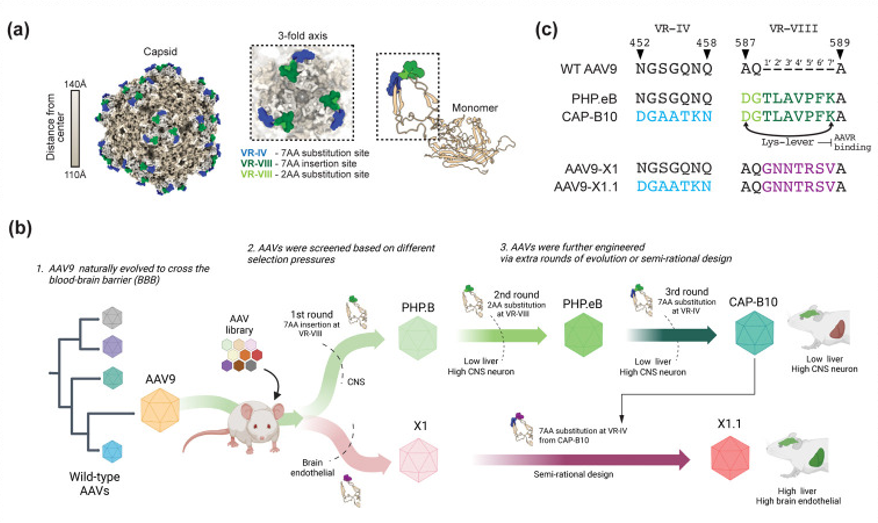

Figure 1. Schematic of directed evolution of PHP.eB, CAP-B10 and X1.1 with high transduction of rodent CNS.
- CAP-B Series (CAP-B10/B22)
The CAP-B variants, engineered via the Multiplexed-CREATE (M-CREATE) platform, represent next-generation BBB-penetrant capsids. CAP-B10 achieves 5-8X higher neuronal transduction than PHP.eB in C57BL/6J mice while minimizing hepatic accumulation, reducing hepatotoxicity risk. Cross-species validation in marmosets confirms similar efficacy. CAP-B22, while maintaining BBB permeability, exhibits astrocytic tropism with partial hepatic targeting, contrasting CAP-B10’s neuronal specificity and hepatic de-targeting.
- AAV9P31 and AAV-F
Developed by Casey Maguire’s lab through multiple rounds of in vivo screening in both C57BL/6 and BALB/c mouse strains. They develop engineered AAV9P31 and AAV-F (AAV9P36) to deal with the limitation that AAV-PHP.B was only effective in specific mouse strains (C57BL/6). AAV9P31 and AAV-F were identified to efficiently cross the blood-brain barrier (BBB) without relying on specific genetic backgrounds (such as the Ly6a receptor).
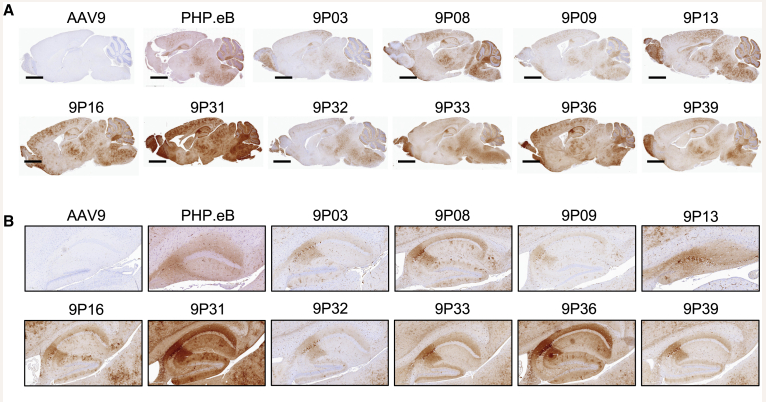
Figure 2. Brain transduction profile of TRACER capsid candidates of AAV9P31 in adult mice
- AAV9P801 and VCAP-102
AAV9P801 is a next-generation AAV9 capsid developed via random peptide insertion into the VR-VIII surface loop region. It serves as a leading candidate for CNS and lung gene therapy, leveraging AAV9’s natural CNS tropism while optimizing biodistribution and transduction efficiency.
VCAP-102, developed by Voyager Therapeutics using the TRACER platform, is an AAV9 variant with significantly improved blood-brain barrier (BBB) penetration. It achieves 20–400-fold higher gene transfer in multiple brain regions compared to AAV9 in preclinical models (rodents/primates). VCAP-102 binds to the alkaline phosphatase (ALPL) receptor, enabling receptor-mediated transcytosis across the BBB. This mechanism reduces off-target liver accumulation and enhances CNS delivery precision, positioning it as a cross-species vector with strong clinical translation potential.
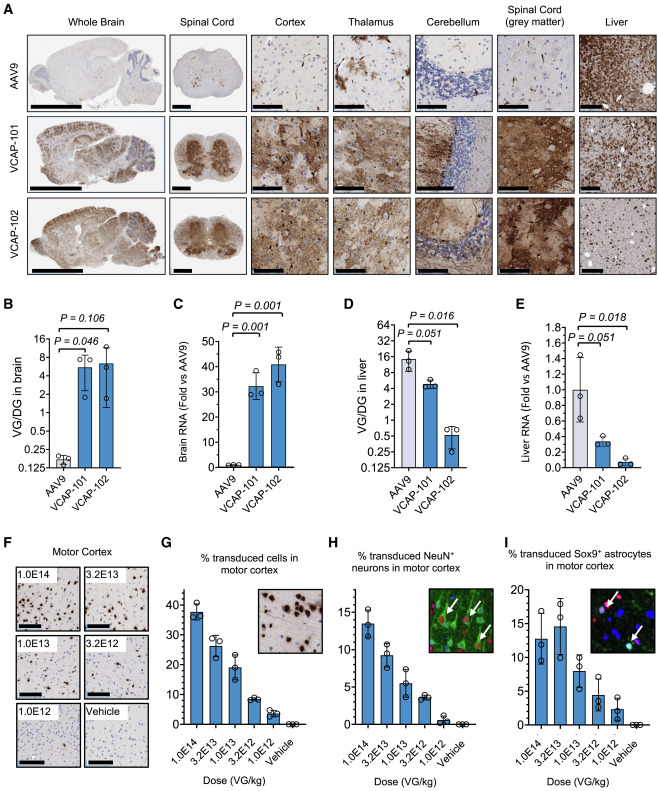
Figure 3. VCAP-101 and VCAP-102 display increased CNS tropism in the mouse brain
- MaCPNS1/MaCPNS2
Developed for dual CNS/PNS targeting, MaCPNS1/2 demonstrate efficient transduction of dorsal root ganglia (DRG), spinal cord, and brain regions in rodents and NHPs. MaCPNS1 exhibits neuronal bias, while MaCPNS2 shows co-targeting of neurons and astrocytes. Both variants exhibit hepatic de-targeting in adult models, with MaCPNS2 enhancing enteric nervous system (ENS) transduction. Cross-species validation in marmosets and rhesus macaques confirms consistent CNS/PNS transduction with cell-type specificity.
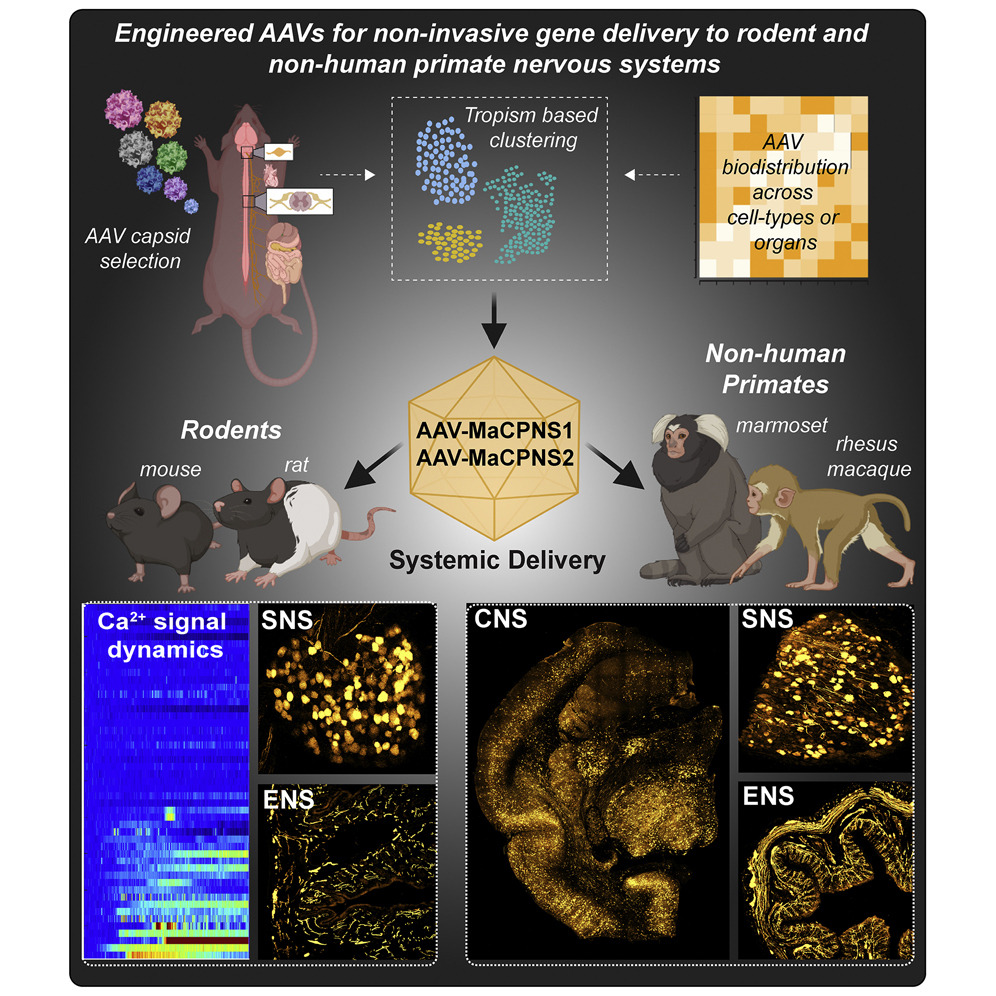
Figure 4. Schematic of directed evolution of MaCPNS1/MaCPNS2 with high transduction in CNS.
- CAP-Mac
Optimized for NHP CNS targeting, CAP-Mac achieves 6-9× higher CNS transduction than AAV9 in rhesus macaques and marmosets with 6-12× reduced hepatic targeting. Neuronal tropism is observed in neonatal Old World primates (OWP), while adult macaques exhibit broader CNS expression. Cross-species validation in murine models confirms neuronal/astrocytic targeting with minimal endothelial transduction.
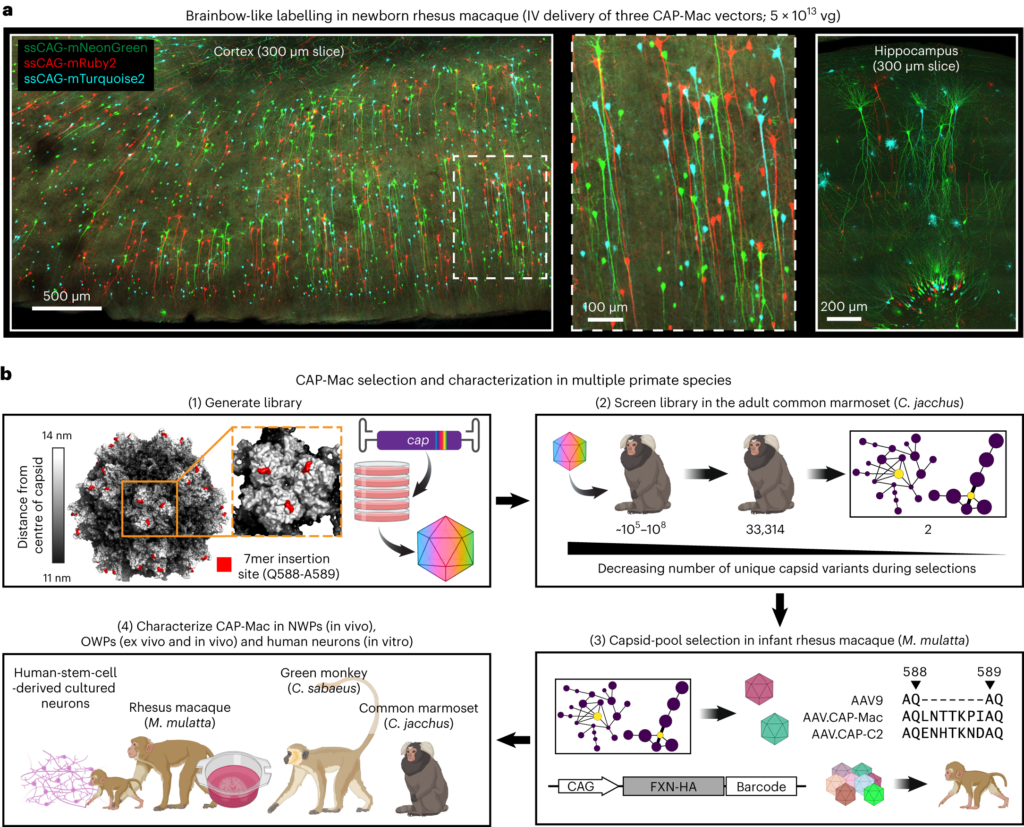
Figure 5. AAV.CAP-Mac is a novel vector that enables brain-wide, systemic gene transfer in NHPs.
- Receptor-Targeted and Machine-Guided Capsids
BI-hTFR1, engineered by the Broad Institute, leverages human transferrin receptor (hTfR1) binding for BBB transmigration, achieving 40-50× higher CNS transduction than AAV9 in hTfR1-humanized mice.
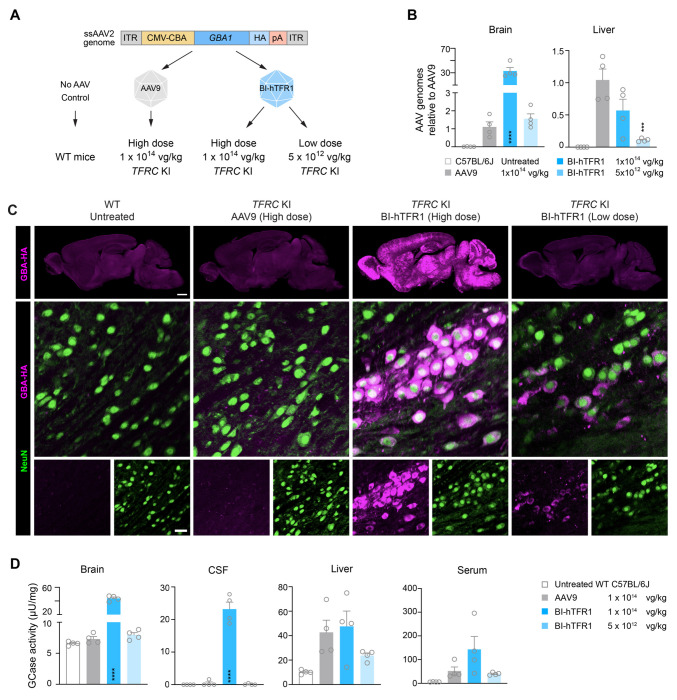
Figure 6. BI-hTFR1 efficiently delivered GBA1 and increased GCase activity in the brains of TFRC KI mice.
- Other Engineered Capsids
BR1 and BI30, developed by Trepel and Deverman groups, respectively, target CNS endothelial cells via AAV2 and AAV9 engineering.
AAV.CPP.16, developed by Fengfeng Bei’s group, utilizes cell-penetrating peptides (CPPs) to enhance BBB permeability in mice and cynomolgus macaques.
AAV-X1, developed by Gradinaru’s group, achieves endothelial-specific transduction in rodents via GLUT1 targeting.
Apertura has licensed its novel TfR1 capsid (TfR1 CapX) to partners targeting CNS disorders TfR1 CapX enables broad brain distribution via intravenous dosing, meeting the urgent need for a non-invasive and well-tolerated gene therapy capsid.
Capsida has developed a next-generation gene therapy candidate (CAP-003) for administration as a single intravenous (IV) infusion to Parkinson’s disease patients with GBA1 mutations (PD-GBA).
Sangamo has developed STAC-BBB capsid to Lilly, which showed robust penetration of the blood-brain barrier (BBB) and strong transgene expression throughout the central nervous system in non-human primates.
JCR Pharmaceuticals has developed JUST-AAV capsids for various target tissues including brain targeting variants to expand the potential of AAV-based gene therapy and licensed capsids to Alexion.
Conclusion
CNS-targeted AAV capsid engineering has revolutionized gene therapy for neurological disorders. Innovations from different groups exemplify the integration of computational design, structural biology, and experimental validation. While challenges in cross-species translation and manufacturing remain, emerging strategies—such as machine learning-guided design and personalized capsid engineering—promise to accelerate the development of safer, more effective therapies. Ongoing research into species-agnostic capsids, re-dosing strategies, and combinatorial treatments will drive the next generation of neurotherapeutics.
Reference
Alahmari, Abeer, Blood-Brain Barrier Overview: Structural and Functional Correlation. Neural Plasticity. 2021; 6564585.
Deverman BE, et al. Cre-dependent selection yields AAV variants for widespread gene transfer to the adult brain. Nat Biotechnol. 2016;34(2):204-209.
Hordeaux J, et al. The neurotropic properties of AAV-PHP.B are limited to C57BL/6J mice. Mol Ther. 2018;26(3):664-668.
Chan KY, et al. Engineered AAVs for efficient noninvasive gene delivery to the central and peripheral nervous systems. Nat Neurosci. 2017;20(8):1172-1179.
Ojala DS, et al. In vivo selection of a computationally designed SCHEMA AAV library yields a novel variant for infection of adult neural stem cells in the SVZ. Mol Ther. 2018;26(1):304-319.
Nonnenmacher M, et al. Rapid evolution of blood-brain-barrier-penetrating AAV capsids by RNA-driven biopanning. Mol Ther Methods Clin Dev. 2021;20:366-378.
Bunuales M, et al. Characterization of brain transduction capability of a BBB-penetrant AAV vector in mice, rats and macaques reveals differences in expression profiles. Gene Therapy. 2024;31:455-466.
Goertsen D, et al. AAV capsid variants with brain-wide transgene expression and decreased liver targeting after intravenous delivery in mouse and marmoset. Nat Neurosci. 2022;25(1):106-115.
Nonnenmacher M, et al. RNA-driven evolution of AAV capsid libraries identifies variants with high transduction efficiency in non-human primate central nervous system. ASGCT Annual Meeting 2021, Abstract TTD-001.
Chen X, et al. Engineered AAVs for non-invasive gene delivery to rodent and non-human primate nervous systems. Neuron. 2022;110(14):2242-2257.
Yao Y, et al. Variants of the adeno-associated virus serotype 9 with enhanced penetration of the blood-brain barrier in rodents and primates. Nat Biomed Eng. 2022;6(11):1257-1271.
Chuapoco MR, et al. Adeno-associated viral vectors for functional intravenous gene transfer throughout the non-human primate brain. Nat Nanotechnol. 2023;18(10):1241-1251.
Kawabata H, et al. A blood-brain barrier-penetrating AAV2 mutant created by a brain microvasculature endothelial cell-targeted AAV2 variant.Mol Ther Methods Clin Dev. 2023;28:77-92.
Huang Q, et al. An AAV capsid reprogrammed to bind human transferrin receptor mediates brain-wide gene delivery. Science. 2024;384(6701):1220-1227.
Moyer TC, et al. Highly conserved brain vascular receptor ALPL mediates transport of engineered AAV vectors across the blood-brain barrier. Mol Ther.