- Organoid Development And Evaluation Service
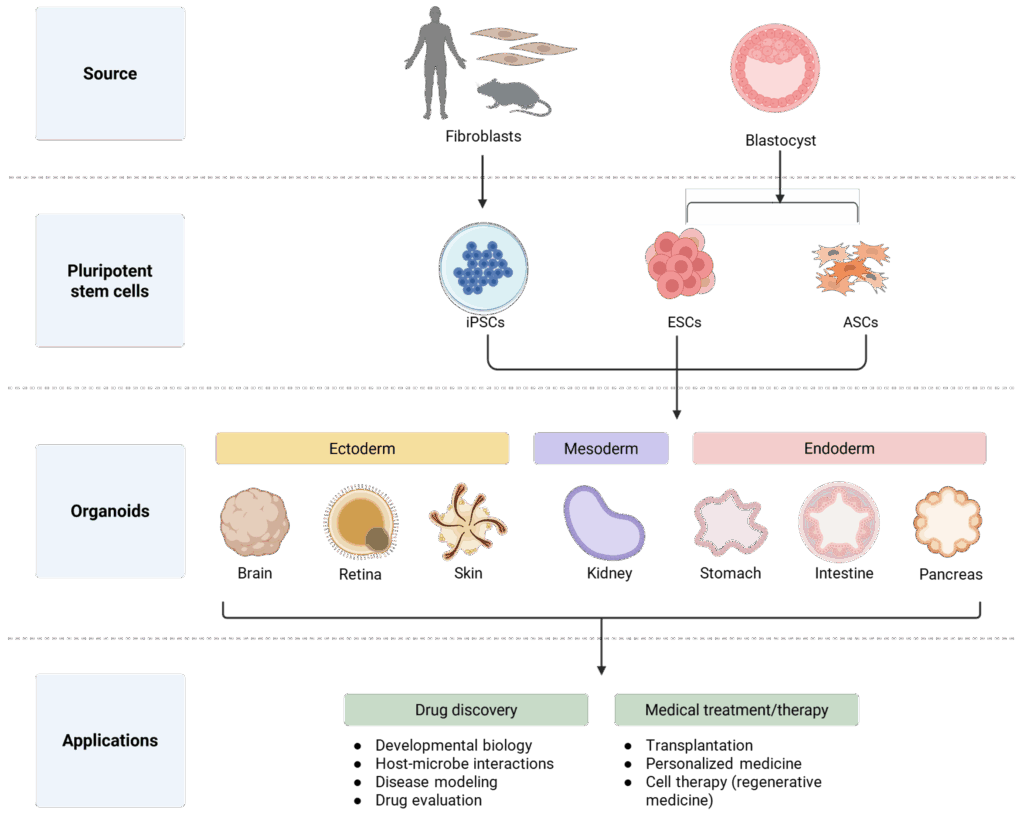
The term ‘organoid’ was used to refer to 3D aggregates forming when cells were cultured in vitro in the absence of an attachment substrate. The current definition comes from the pioneering work of the Clevers lab, leading to the discovery of adult stem cells in the intestine. Organoids can be derived from either multipotent organ-specific adult stem cells (ASCs), pluripotent stem cells (PSCs) (i.e. embryonic stem cells, or ESCs), or induced PSCs (iPSCs). The resulting organoids can be composed exclusively of epithelial cells or both epithelial and mesenchymal cell types。
Today, organoids specifically refer to structures with the following characteristics:
- A 3D structure derived from stem cells that establish and retain the identity of the organ being modeled (both stem cells and their progeny).
Similar features to the organ which the organoid was derived from:
1- Presence of multiple cell types.
2- Some aspect of the organ’s specialized function.
3- Self-organization which parallels the parental organ’s same intrinsic organizing principles.